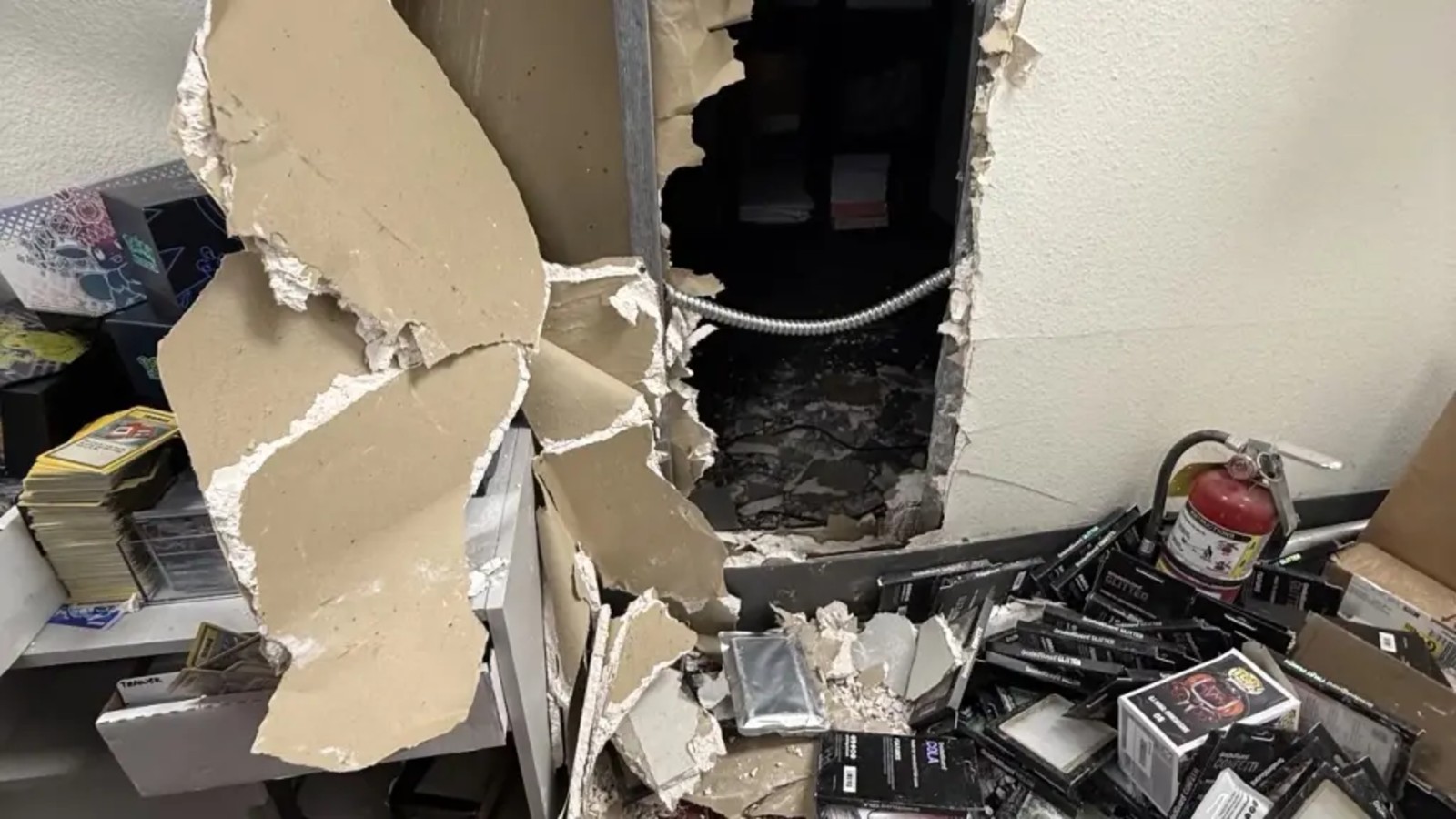
The Escalating Threat: Why Pokémon Cards Are Now High-Value Targets for Thieves
Once considered mere children's toys, Pokémon cards have evolved into a formidable investment class, with rare editions fetching hundreds of thousands, even millions, of dollars. This meteoric rise in value has, regrettably, drawn the attention of a less scrupulous crowd: organized criminals. Across the nation, incidents involving stolen Pokémon cards are on the rise, with thieves employing increasingly audacious and violent methods, from elaborate tunneling operations to armed robberies and the destructive use of chainsaws, to lay claim to these coveted collectibles. The era of casual playground trades is long gone; we are now witnessing a sophisticated, and often dangerous, criminal enterprise targeting the booming Pokémon market.
The allure of vintage and rare Pokémon cards, driven by nostalgia, speculation, and their tangible nature, makes them incredibly appealing to collectors and investors alike. However, this same appeal also makes them a prime target for theft. The ease with which these cards can be transported, coupled with a robust, albeit sometimes illicit, secondary market, provides a fertile ground for criminals looking to profit from stolen Pokémon cards. This article delves into the brazen tactics employed by these thieves, examines the underground economy that facilitates their crimes, and offers crucial advice for collectors and shop owners alike to safeguard their valuable assets.
Bold Tactics: Tunnels, Chainsaws, and Armed Confrontations
The landscape of Pokémon card theft is marked by a disturbing trend towards more aggressive and meticulously planned operations. Thieves are no longer merely snatching a booster pack; they are executing sophisticated heists mirroring those typically associated with high-value art or jewelry.
The "Tunneling" Technique: A Calculated Breach
One of the most striking examples of this evolving criminal sophistication recently unfolded in Anaheim, California. A group of four suspects meticulously planned and executed a break-in that involved more than just smashing a window. They first breached an adjacent insurance office, then proceeded to cut a significant hole through the shared wall, tunneling directly into Do-We Collectibles on Harbor Blvd. This elaborate method allowed them to bypass the shop's primary security measures, leading to the theft of an estimated $180,000 worth of stolen Pokémon cards, including individual cards valued at $10,000. Surveillance footage revealed the criminals had clearly "scouted the area" during the day, identifying display cases and potential weaknesses, highlighting the premeditated nature of such crimes. In a stroke of poetic justice, one of the suspects inadvertently left behind an unlocked phone, providing crucial evidence for investigators.
Chainsaws and Brute Force: When Destruction is the Goal
In another shocking incident, a shop in Simi Valley, Simi Sportscards, faced a terrifying ordeal where thieves resorted to extreme violence. Using a chainsaw, criminals forcibly breached the store, then proceeded to smash display cases, making off with at least $50,000 in valuable stolen Pokémon cards. This level of destructive force underscores a chilling willingness to cause significant property damage to achieve their objective, demonstrating an escalation in the ruthlessness employed by these criminal elements. Such acts not only result in massive financial losses but also leave shop owners and their communities deeply shaken.
Armed Robberies: Direct Threats to Collectors
Perhaps the most alarming development is the direct targeting of individuals through armed robbery. In West Los Angeles, a customer leaving RWT Collective in Sawtelle became a victim of a brazen armed heist. As he headed to an underground parking garage, robbers, who had reportedly been inside the store earlier, confronted him with a handgun, stealing a briefcase containing approximately $300,000 worth of his personal Pokémon card collection. This incident, potentially linked to the Simi Valley break-in, signifies a dangerous shift. It's no longer just about breaking into a building; it's about direct, violent confrontation with card owners, turning collectors into targets. For more context on the methods and patterns, see our related article: High-Value Pokémon Card Thefts: Unpacking Recent Heists.
The Illicit Market for Stolen Pokémon Cards
Behind every theft is the intent to profit, and stolen Pokémon cards are no exception. An intricate, often shadowy, network facilitates the resale of these illicit goods, making it challenging for law enforcement and frustrating for victims. The case of Stashu I. Roberts in Malta, NY, illustrates this perfectly. Roberts was apprehended for knowingly possessing and selling approximately 105 assorted stolen Pokémon cards and Yu-Gi-Oh! cards, using a physical building to offer them for cash. This demonstrates that the crime doesn't end with the theft; a distribution channel is vital for criminals to monetize their gains.
The illegal market for stolen Pokémon cards thrives on several platforms:
- Online Marketplaces: While legitimate platforms strive to prevent the sale of stolen goods, sophisticated sellers can use burner accounts, obscured item descriptions, and rapid transactions to move cards before they're flagged.
- Local Card Shops (Unwittingly or Knowingly): Some less reputable shops or individuals might turn a blind eye to suspicious deals, especially if the price is enticing.
- Private Sales & Conventions: Direct, cash-only transactions at conventions or private meetings offer anonymity, making it difficult to trace origins.
For buyers, vigilance is paramount. If a deal seems too good to be true, it likely is. Be wary of sellers pressuring for quick sales, lacking proper documentation for high-value cards, or operating outside established, reputable channels. Always request detailed photos, proof of ownership (if buying from an individual), and compare prices against market averages. This due diligence can help disrupt the illicit trade and prevent you from inadvertently supporting criminal activity.
Protecting Your Collection: Tips for Collectors and Shop Owners
In light of the escalating threat, both individuals and businesses must prioritize robust security measures to protect their valuable Pokémon card collections. Prevention is the most effective defense against the pervasive problem of stolen Pokémon cards.
For Shop Owners:
- Enhanced Physical Security: Invest in high-quality alarm systems, surveillance cameras (both visible and covert), reinforced glass display cases, and secure safes for high-value inventory. Consider motion sensors, glass break detectors, and even fog security systems.
- Access Control: Restrict access to back rooms and storage areas. Monitor who enters and exits the premises, especially after hours.
- Vigilance and Awareness: Train staff to recognize suspicious behavior, such as individuals meticulously "scouting" the store without making purchases, asking detailed questions about security, or showing unusual interest in inventory layout.
- Inventory Management: Maintain detailed records of all high-value cards, including photographs, serial numbers (if applicable), and appraisals. This aids in insurance claims and law enforcement recovery efforts.
- Community & Law Enforcement Collaboration: Share information about suspicious activities with other local businesses and maintain open lines of communication with local police departments. Learn more about ongoing investigations in our dedicated article: Stolen Collections: Investigating the Surge in Pokémon Card Robberies.
For Individual Collectors:
- Secure Storage: For extremely valuable cards, consider professional storage solutions like bank safety deposit boxes. At home, invest in a high-quality fireproof and waterproof safe that is anchored to the floor or wall.
- Insurance: Obtain specialized collector's insurance that covers theft, damage, and loss. Standard homeowner's insurance often has limited coverage for high-value collectibles.
- Documentation: Keep meticulous records of your collection, including detailed photographs (front and back), purchase receipts, certification numbers from grading companies (e.g., PSA, BGS, CGC), and professional appraisals. This documentation is invaluable for insurance claims and proving ownership if cards are recovered.
- Discretion: Avoid flaunting the value of your collection publicly, especially on social media. While it's tempting to share prized possessions, it can inadvertently make you a target.
- Vigilance During Transactions: When buying or selling, use reputable platforms and meet in safe, public places, or consider using secure shipping methods for online sales.
Law Enforcement's Challenge and Response
Tackling the surge in stolen Pokémon cards presents unique challenges for law enforcement. The collectible nature of the goods, their ease of transport, and the often anonymous online resale markets complicate investigations. However, police forces are adapting. The discovery of a dropped, unlocked phone in the Anaheim tunneling incident proved to be a critical piece of evidence, demonstrating how even seemingly minor oversights by criminals can provide significant breakthroughs. Furthermore, police departments are actively investigating potential connections between various high-profile thefts, suggesting a growing understanding of the organized nature of these crimes. The concerted effort to identify and prosecute individuals involved in possessing and selling stolen Pokémon cards, as seen in the Gloversville case, is crucial to disrupting the entire criminal supply chain.
Conclusion
The transformation of Pokémon cards into a lucrative target for thieves is a stark reminder of their significant and enduring value. From sophisticated tunneling operations and destructive chainsaw attacks to direct armed robberies, the methods employed to acquire stolen Pokémon cards are becoming increasingly audacious and dangerous. This alarming trend necessitates a proactive and vigilant approach from everyone involved in the hobby. By understanding the tactics of criminals, securing collections with robust measures, and fostering a community committed to ethical trading, we can collectively work to safeguard the integrity of the Pokémon collecting world and ensure that the thrill of the chase remains in the game, not in real-world crime.